
The council's forecast surplus for 2027/28 has fallen from £1.4m to £78,000, and one scenario in its own budget report turns that into a £909,000 gap.
St Albans City and District Council expects to have £78,000 to spare when it sets its budget for 2027/28. In February it was forecasting a surplus of £1.4 million.
The figure is in the council’s own budget setting report, published this month for the Strategy and Resources Committee meeting on Thursday 24 September. It is the paper that starts the budget round, and every service and scrutiny committee will get the same one.
A surplus of £78,000 is a rounding error. The same plan puts the council’s gross general fund spending next year at about £62 million. The report does not pretend otherwise. It sets out three scenarios, and in the worst of them the surplus becomes a gap of £909,000.
Three scenarios, one of them a £909,000 gap
The report models what happens to that £78,000 if inflation, commercial rent income and homelessness costs move against the council.
| Scenario 1 | Scenario 2 (MTFS) | Scenario 3 | |
|---|---|---|---|
| Inflation assumption | 2.5% | 3.0% | 3.5% |
| Inflation impact | −£129k | £0 | £437k |
| Commercial rental income | £0 | £0 | £250k |
| Homelessness budget | £0 | £0 | £300k |
| Budget gap (negative = surplus) | −£207k | −£78k | £909k |
Scenario 2 is the one written into the Medium-Term Financial Strategy. Scenario 3 is not a remote possibility. The report notes that CPI was 2.6% in June and 2.9% in July, and quotes the Bank of England’s July forecast that it rises to 3.2% in October and November before easing.
The council’s exposure to that is set out plainly. Every 1% change in general inflation costs £345,000 on the non-staff budget, and every 1% on pay costs £190,000. The 2026/27 pay award was settled at 3.3%. The plan assumes 3.0% next year.
Why the surplus shrank: homelessness
The single biggest pressure in the report is temporary accommodation, and the numbers are stark.
At the end of July 2026 the council had 244 households in temporary accommodation, including 58 placed in hotels. At the end of December 2025 the figures were 192 households and 27 hotel placements. That is 52 more households in seven months, and more than double the number in hotels.
The council had already put an extra £1 million into the temporary accommodation budget when it set the 2026/27 figures. Demand carried on rising past it. The report says demand “now exceeds the supply of available temporary accommodation properties”, which is why hotel use has climbed.
For next year the plan adds another £200,000 for temporary accommodation, with a further £300,000 of risk on top if demand keeps growing. That £300,000 is the homelessness line in scenario 3.
Officers say they are reviewing the data to understand what is driving the increase, expanding supply within the council’s own housing stock, and considering placements outside the district where that is appropriate and cost effective.
This year is already £900,000 off
The 2027/28 position is not the only problem. The forecast for the current year, at the end of July, was £0.9 million worse than budget. The report gives two causes:
- £600,000 of increased homelessness costs
- £400,000 relating to delays in signing leases at Jubilee Square
That matters because it eats reserves. The council’s general fund general reserve stood at £4.3 million on 31 March 2026. If the overspend is not clawed back, it is projected to be £3.7 million on 31 March 2027, against a minimum level of £3.4 million.
That leaves £400,000 of headroom, about 10%. The report says in terms that this “would be a financial risk for the Council if the forecast outturn deteriorates further”, and that it reduces the council’s ability to respond to economic shocks, spikes in demand or infrastructure failures. It also reproduces a CIPFA resilience index chart showing St Albans holding lower reserves as a share of income than its comparable district councils.
Spending reserves is not a way out either. The report cites MHCLG guidance from July 2025 on financial decisions before local government reorganisation, which names “the spending of reserves” as a decision that could fetter the successor authority. Councils, it says, “should not deliberately run down reserves before vesting day”.
The council tax assumption is already in the plan
The five-year plan assumes a council tax rise of 2.99% in each of the next five years. For 2027/28 that is £6.41 on a band D bill, taking the council’s own share from £214.22 to £220.62, and raising an extra £418,000. A further £70,000 comes from assuming the tax base grows by 0.5%.
That is the district council’s slice only. Hertfordshire County Council and the police take the larger shares, and your parish or special expenses line sits on top of both. Our St Albans council tax bands page sets out the full bill for each of the ten parish areas this year.
Fees and charges are the other lever, and the report is explicit about how they will be handled. The budget setting principles the council will adopt for 2027/28 are:
- increase fees and charges by at least the rate of inflation, or the maximum allowed where regulations cap them
- charge for services where it is able to, and keep reviewing all fees so delivery costs are fully recovered where the law permits
- focus on delivering essential services at the level the statutory requirement demands
- find further general efficiencies and defer non-essential spending
Reorganisation costs £950,000 a year, paused or not
The plan sets aside £950,000 a year from the general fund every year to 2030/31, plus £50,000 from the housing account in 2027/28, for local government reorganisation transition costs.
The report also warns that the Structural Changes Order and an accompanying section 24 direction are expected to restrict what the council can commit to. Its current expectation is that anything above roughly £1 million of capital spending or £100,000 of revenue spending would need the agreement of the shadow board for the new unitary authority, though it stresses no threshold has been confirmed and that the Secretary of State decides the content of each direction.
There is a complication the report does not address. The government announced a review of reorganisation decisions on 7 September, and the Hertfordshire programme’s senior responsible officer confirmed the following day that the shadow authority elections will not take place in May 2027. No new date for a shadow board, or for vesting day, has been published. The £950,000 a year stays in the plan regardless.
What happens next
The budget is not set on Thursday. This is the first stage of a process that ends in February, and these are the dates in the report:
- November 2026: service and scrutiny committees discuss budget proposals and savings options
- November or December 2026: the provisional local government finance settlement is confirmed
- January and February 2027: committees debate and agree proposals to send to Strategy and Resources
- 10 February 2027: Strategy and Resources agrees the full budget, including the housing account
- 24 February 2027: full council agrees the budget, and sets council tax and rents for 2027/28
Councils have no discretion about the destination. Section 30(6) of the Local Government Finance Act 1992 requires a budget to be set before 11 March.
What it means for you
The decisions that close the gap have not been made yet, and November is when they start. On Thursday each committee is only asked to comment and suggest where savings or extra income might come from within its own remit. Options come back to committees in November 2026 and January 2027. If you want to influence what gets cut or charged for, that is the window, and your district councillors are the route in.
Assume a council tax rise of about 3% unless something changes. A 2.99% increase is written into all five years of the plan. It is an assumption, not a decision, and full council takes the decision on 24 February 2027.
Expect fees and charges to rise by at least inflation. That is now a stated principle, and it covers everything from car parking to garden waste to licensing, except where regulations set the price.
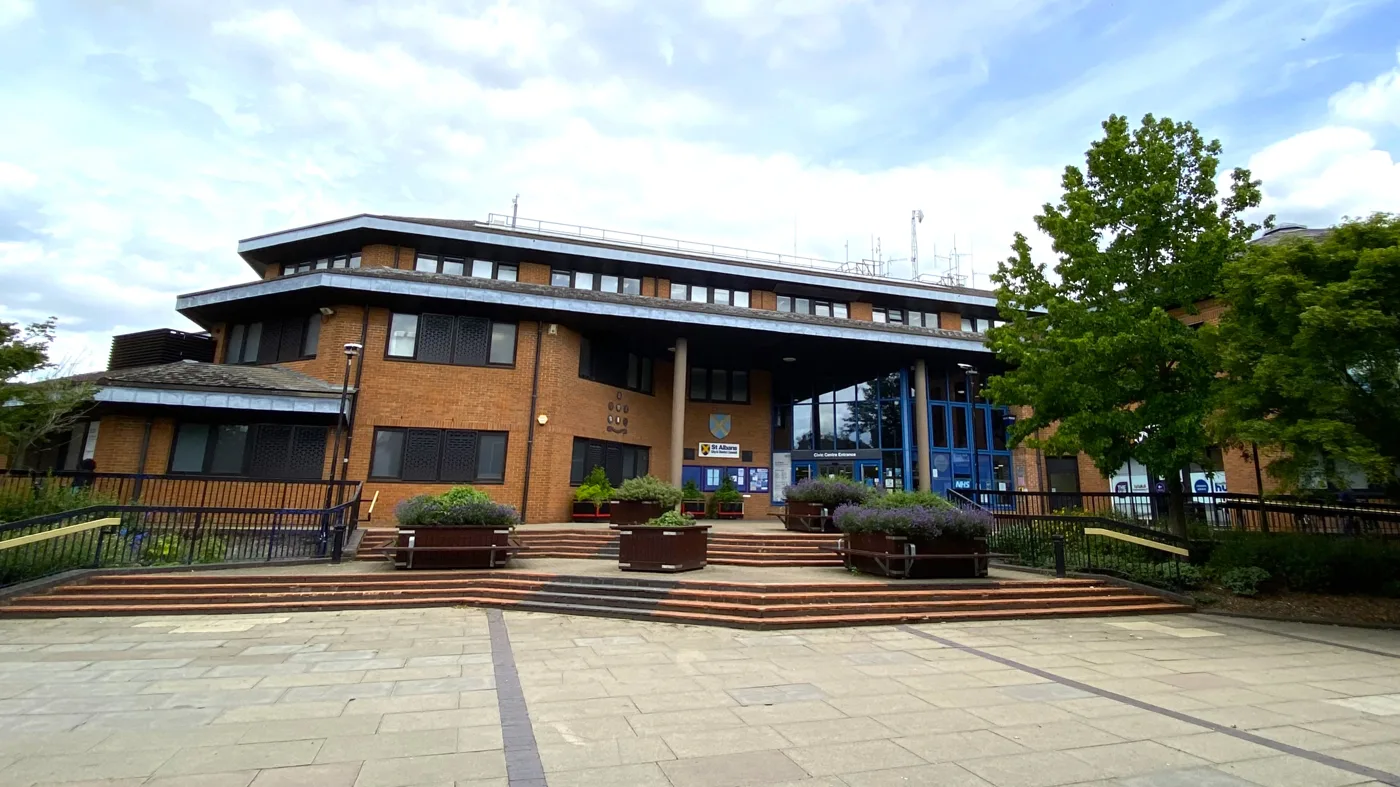
Thursday’s meeting is public. Strategy and Resources meets at 7pm on Thursday 24 September in the Council Chamber at the District Council Offices, St Peter’s Street, AL1 3JE, and the council webcasts its meetings.
Sources. All figures are from the council’s own papers for the Strategy and Resources Committee meeting of 24 September 2026: the agenda and full reports pack, the report Budget Setting Considerations for Committees for 2027/28 by Linda Parker, assistant director and section 151 officer, and Appendix 1, the five-year financial plan. The reorganisation guidance quoted is MHCLG’s Financial decisions before local government reorganisation. The inflation forecast the report relies on is the Bank of England Monetary Policy Report, July 2026.
Have your say