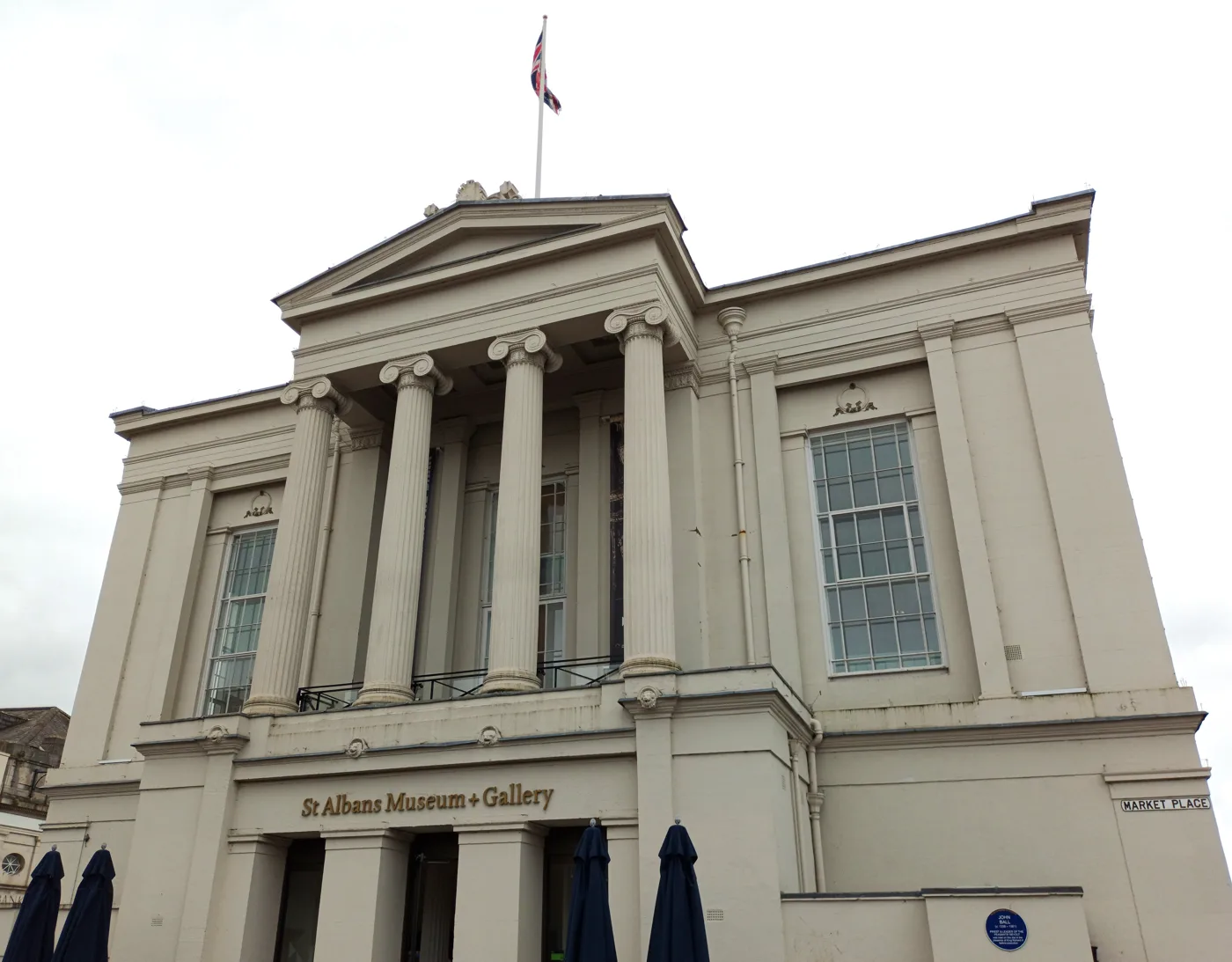

Officers want the mayoralty handed to the new City Centre Parish Council, not the unitary, when the district council goes. The transfer would cost £6,000.
St Albans has had a mayor without a break since 1553. Council officers now want that mayoralty handed to a parish council rather than to the unitary authority that is meant to replace St Albans City and District Council.
The recommendation goes to the Strategy and Resources Committee on Thursday 24 September. It asks the committee to recommend to full council that the mayoralty transfers to St Albans City Centre Parish Council, the new parish being created for the centre of the city, from the date the district council ceases to exist. The parish council would have to agree.
The report was written by Megan Seiorse, the council’s deputy monitoring officer, and is carried under Councillor Paul De Kort, lead councillor for strategy.
Doing nothing has a consequence
The mayoralty is not simply an office the council can keep. It sits on a Royal Charter, and charters transfer with everything else when a council is abolished.
The report sets out the default position bluntly. Under regulation 7 of the Local Government (Structural Changes) (Transfer of Functions, Property, Rights and Liabilities) Regulations 2008:
all property, rights and liabilities of the predecessor councils shall on the reorganisation date vest in, and transfer to, the successor council.
In other words, if nobody acts, the mayor of St Albans becomes an office of the new unitary council covering a much larger area.
Officers give two reasons for not letting that happen. The first is that the office would matter less inside a bigger authority. The second is sharper: it would be difficult to insist that candidates for the mayoralty come only from St Albans wards, so the report warns the mayor “could have no relationship to St Albans at all”.
What the charters actually say
The council’s own account of the mayoralty runs through three documents.
- 1553. The first Royal Charter is granted, and St Albans has had a mayor in place continuously since.
- 1877. Letters Patent add the title “The Royal Worshipful”.
- 1974. A Royal Charter extends the area the mayoralty covers to the new borough, which is the whole city and district.
The 1974 Charter is published in full as an appendix to Thursday’s report, and it is worth reading. It is granted by Elizabeth II and dated 2 July 1974. It gives the district of St Albans the status of a borough, not a city. What it does with the city is carry it forward: any power to appoint local officers of dignity held by “the mayor, aldermen and citizens of the former city of St. Albans” becomes exercisable by the borough council across the whole borough, and the privileges of the citizens of the former city become the privileges of everyone living in it.
That last clause is why the geography matters now. The council has asked the Ministry of Housing, Communities and Local Government to update the Charter so it refers to “the area previously covered by the Borough of St. Albans”. The aim is that the mayor continues to cover the same ground after the district council has gone.
The mayor would not run the parish council
One point in the report will surprise anyone who assumes a mayor chairs the meetings. Under the proposal the mayor would not chair the parish council’s full meetings at all.
Parish councils elect a chair to preside. The report calls that a political role and says it is therefore not appropriate for a ceremonial mayor. So the parish would have a chair who runs the meetings and a mayor who does the civic work, and they would be two different people.
That is deliberately different from Harpenden. Harpenden Town Council uses the “town council” styling, which means its chair is styled as mayor. Harpenden’s own website confirms it: the town mayor “is the Chairman of the Council”, elected each year at annual council in May, and carries out the civic role alongside it. The new St Albans body was not given the “town council” styling, so the report says there would only be room for one mayor there.
The mayor would be one of the parish’s 25 councillors, chosen each year by the parish council. At the moment the district uses a points system in which each political group has a quota and the mayoralty is offered in order of quota size. District officers would design something similar and recommend the parish adopt it.
What it costs to move
The transfer is not free, and it involves moving more than a title.
- About £6,000 to the College of Arms, which produces the documentation and helps the council petition the King. The report is clear that this cost is the same wherever the mayoralty goes.
- The civic regalia would transfer, and so would the cost of insuring it.
- The physical Charter would be owned by the unitary council, because other rights sit in the same document.
- One full-time post is expected to transfer under TUPE, with the on-costs that go with it.
The report gives no figure for the ongoing cost of that post. Parish councils raise their general income through a precept added to council tax bills in their area, and the new parish has not set one. Our St Albans council tax bands page shows how each existing parish precept appears on a bill.
Legally the move would need a section 7 restructuring order under the same 2008 regulations that would otherwise send the mayoralty to the unitary.
The parish that would inherit it
St Albans City Centre Parish Council does not exist yet. It comes from the council’s Community Governance Review, and its timetable is published on the council’s own site.
- A Reorganisation of Community Governance Order is laid in September 2026
- A shadow parish council is set up from September 2026 to May 2027
- A polling district and polling places review runs from October 2026 to February 2027
- The electoral register is republished on 1 February 2027
- The Order takes effect for administrative and financial purposes on 1 April 2027
- The first elections are on 6 May 2027
The parish will have 25 councillors across nine wards: Batchwood, Bernards Heath, Clarence, Cunningham, Hill End, Sopwell, St Peters and Verulam with three each, and Marshalswick West with one. Those are the wards of the central area that is unparished today.
The timing problem the report does not mention
The recommendation is written around “the date at which the District Council ceases to exist”. There is currently no such date.
The government announced a review of local government reorganisation decisions on 7 September, and the senior responsible officer for the Hertfordshire programme confirmed the next day that elections to the shadow authorities will not take place in May 2027. Thursday’s report does not refer to the review. It describes the reorganisation programme as continuing.
That does not make the recommendation pointless. A transfer of this kind has to be settled well before a vesting day, not after one, and the parish council’s own timetable is unchanged. It does mean the trigger date in the recommendation is open.
What it means for you
Nothing is decided on Thursday. The committee is being asked to recommend the transfer to full council. A further report then goes to the shadow parish council and to full council in the coming months, and the parish council itself has to consent before anything happens.
If you live in one of the nine central wards, this is your parish council. It is being created whether or not it takes the mayoralty, it will set a precept that appears on your council tax bill, and its first elections are on 6 May 2027. The shadow council is being formed now.
If you live elsewhere in the district, the mayor is still meant to be yours. The council’s stated aim is that the mayor keeps covering the same area, which is why it has asked the ministry to reword the Charter, and the report expects the other parishes to carry on inviting the mayor to their events.
Thursday’s meeting is public. Strategy and Resources meets at 7pm on Thursday 24 September in the Council Chamber at the District Council Offices, St Peter’s Street, AL1 3JE. The council webcasts its meetings.
Sources. The recommendation, the history and the costs are from Future of the Mayoralty and its Appendix 1, a transcript of the 1974 Royal Charter, in the agenda pack for the Strategy and Resources Committee of 24 September 2026. The parish timetable, ward pattern and councillor numbers are from the council’s Community Governance Review final recommendations. The Harpenden comparison is from Harpenden Town Council’s own town mayor page. The regulations quoted are the Local Government (Structural Changes) (Transfer of Functions, Property, Rights and Liabilities) Regulations 2008.
Have your say