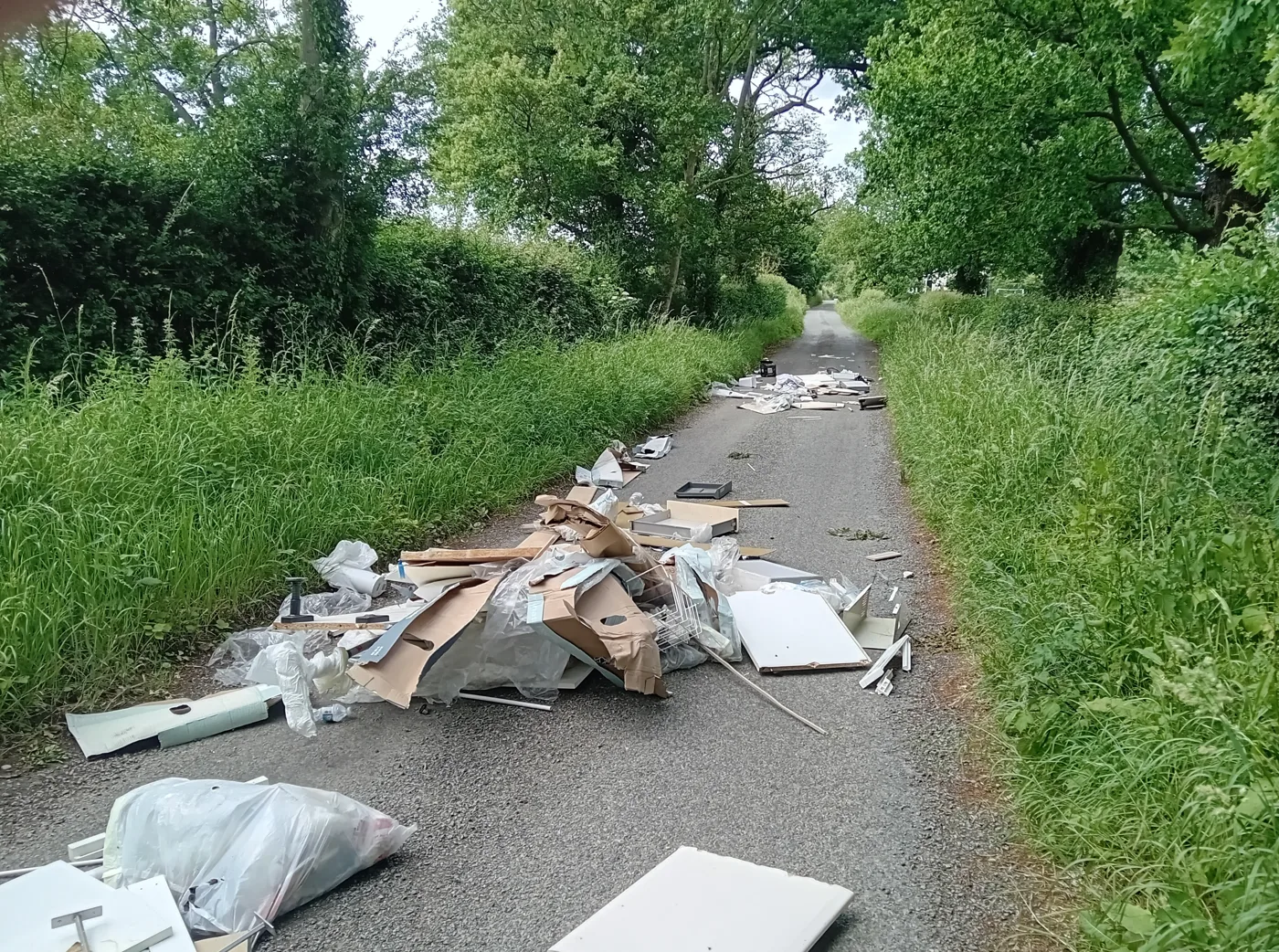

Fly-tipping fines in St Albans district treble from £1,000 to £3,000. National rules allow £5,000, and the council report says why it stopped short.
The most a fly-tipper can be fined on the spot in St Albans district has gone from £1,000 to £3,000. The Public Realm Committee of St Albans City and District Council agreed the new scale at its meeting on Thursday 10 September.
Fixed penalties for duty of care offences, where a householder or business lets someone take their rubbish away without checking the collector is a licensed waste carrier, rise from a maximum of £600 to £1,000.
The council could have gone higher. The regulations that made the increase possible allow a fixed penalty of up to £5,000, and the officer report put to the committee is candid about why it recommended £3,000 instead.
What the new scale actually is
Neither figure is what most offenders will pay. St Albans works on a points system, and the points decide the fine. Officers score a fly-tip on three things:
- Size: three black bags or less is 1 point, a car boot load 2, a van load of 2 to 4 cubic metres 3, and a tipper load over 4 cubic metres 4.
- Nature: inert waste scores nothing; waste that is a public health or environmental hazard adds 1 point.
- Commercial nature: if the person who dumped the waste was paid to remove it, that adds 1 point. This factor applies to fly-tipping only, not to duty of care.
The points then map straight onto a fine.
| Points | Fly-tipping (s33) | Duty of care (s34) |
|---|---|---|
| 1 | £400 | £300 |
| 2 | £600 | £500 |
| 3 | £800 | £600 |
| 4 | £1,000 | £800 |
| 5 | £2,000 | £1,000 |
| 6 | £3,000 | not applicable |
The bottom of the scale has not moved. A small fly-tip still costs £400, the figure St Albans set when it introduced its first fly-tipping fixed penalty in 2016. What has changed is the top. The only way to reach £3,000 is to score all six points: a tipper load of more than four cubic metres, containing something hazardous, dumped by someone who was paid to take it away.
Why not £5,000
The increase was made possible by the Environmental Offences (Fixed Penalties) (Amendment) (England) Regulations 2026, laid before Parliament on 15 July and in force from 1 September 2026. They amend section 33ZA of the Environmental Protection Act 1990, substituting “£5000” for “£1000” as the upper limit a council may set for a waste deposit offence.
The officer report explains the decision to stop at £3,000 in plain terms. A fixed penalty is an offer, not a sentence. Nobody is obliged to accept one, and if they refuse, the council has to consider prosecuting instead.
Preparing a prosecution case is very time consuming and the fine levels handed down by the courts vary significantly. Officers have considered this point in setting the new levels. There is a risk that if the fine levels are set too high more offenders may refuse the FPN and opt for a court attendance.
Set the penalty at £5,000 and more people take their chances in court, which costs the council staff time and produces an unpredictable result. Set it at £3,000 and more people pay. Money raised through fixed penalties is ring-fenced for clean-up and enforcement.
The same regulations also raised the ceiling for littering fines, from £500 to £750. The 10 September report put no change to litter penalties before the committee.
The numbers behind the decision
The report is the council’s annual update on fly-tipping enforcement, and its own table is the clearest picture of what is happening in the district.
| Year to March | 2023 | 2024 | 2025 | 2026 | 2026/27 so far |
|---|---|---|---|---|---|
| Fly-tips reported | 515 | 601 | 895 | 920 | not stated |
| Fly-tips investigated | 187 | 345 | 271 | 228 | 73 |
| Fixed penalties issued | 19 | 52 | 65 | 24 | 23 |
| Prosecutions | 0 | 1 | 5 | 6 | 1 |
| Formal cautions | 3 | 13 | 7 | 6 | 2 |
| Statutory notices | 19 | 11 | 33 | 4 | 1 |
Reported fly-tips have risen by 79 per cent in four years, from 515 to 920. Investigations have not followed. The council investigated 228 of last year’s 920, which is one in four.
The report is straightforward about why. Most fly-tips carry no evidence at all, typically dumped builders’ waste, or any evidence has been stripped out before it was dumped. Officers now pick the tips that might contain an address label, a receipt or a delivery note and leave the rest to be cleared.
There is one figure in the report that puts the whole thing in proportion. Total fines paid in 2025/26 came to £5,600, with a further £1,500 outstanding. That is the sum recovered from a year in which 920 fly-tips were reported.
Fixed penalties issued also fell sharply last year, from 65 to 24, before rebounding: 23 have been issued since April 2026 alone. One prosecution has succeeded this year and the report says 13 more files are being written up.
How St Albans compares in Hertfordshire
The report sets the district against the other nine Hertfordshire councils. On fly-tipping penalties actually paid over four years, St Albans recorded 87, behind Welwyn Hatfield on 183 and Watford on 101, and ahead of Dacorum on 70 and Broxbourne on 51. On duty of care penalties paid, St Albans recorded 38, level with Hertsmere and just behind East Herts on 39.
Two cautions apply to those figures, and the council states both. The tables count paid penalties only, not every penalty issued, and the data comes from the Herts Waste Partnership, which the council says may not be fully accurate for other authorities because it cannot confirm when they last updated their returns.
Staffing is where the comparison gets awkward. The report says the council employs “two full-time officers” who predominantly deal with fly-tipping, then later describes the team as 1.5 full-time equivalent against authorities with four officers. The two statements sit in the same document and it does not reconcile them. On either figure the point the report is making holds: St Albans issues among the most penalties in the county with fewer staff than several councils that issue fewer.
What it means for you
If you pay someone to take rubbish away, the duty of care fine is the one that could land on you. It applies to householders as well as businesses, and the maximum has just risen to £1,000. The council says the reasonable steps expected of you are to check the person collecting is a registered waste carrier and to get a receipt.
Waste carrier registration can be checked free on the Environment Agency’s public register. If your rubbish later turns up in a lane, the paper trail is what stands between you and a fine.
If you spot a fly-tip, do not touch it. The report is emphatic on this point: moving or removing anything from a fly-tip can break the chain of evidence and make it impossible for officers to take action. Report it and leave it where it is.
A fixed penalty is not the ceiling. Fly-tipping is a criminal offence, and the council’s own guidance says a conviction can bring a fine of up to £50,000 and up to 12 months in prison, or an unlimited fine in the Crown Court.
Businesses get less benefit of the doubt than households. The report says officers visit premises, restaurants among them, and ask to see the waste collection contract. Any business that cannot produce the paperwork is issued with a £300 penalty.
Where it happens
The council runs eight cameras in the more rural parts of the district, and since 2024 has run Project Oculus with parish councils to put more cameras out while sharing the cost.
The pattern the report describes is not about bin bags on residential streets. It is commercial waste, building waste and house or shop clearances, left in quiet remote laybys and lanes. The report identifies easy access from the M1 as the reason hotspots cluster along that corridor, and names the rat runs between London and Luton as targets.
Councillor Edgar Hill is the committee’s vice-chair and its lead for fly-tipping. In the council’s announcement of the decision he said fly-tips are “not only a criminal offence, but they are also an eyesore, a potential health hazard and can be very costly to clear up”.
Report a fly-tip to the council through its fly-tipping page. Household waste you take away yourself goes to a Hertfordshire County Council recycling centre rather than a district one, and every Hertfordshire centre now requires a free ePass for every visit. Our guides to St Albans bin collection days and St Albans council tax bands cover the rest of what the council charges for and collects.
Frequently asked questions
How much is the fine for fly-tipping in St Albans?
Between £400 and £3,000, depending on how officers score the tip. The scale runs on points for size, how hazardous the waste is and whether the person who dumped it was paid to take it away. A small tip of three bags or fewer scores one point and costs £400. Only a tipper load of more than four cubic metres, containing hazardous waste and dumped for payment, reaches the full £3,000.
Can I be fined if someone else dumps rubbish I paid them to take away?
Yes. That is a duty of care offence under section 34 of the Environmental Protection Act 1990, and the maximum fixed penalty for it in St Albans district has risen from £600 to £1,000. The council expects you to check the collector is a registered waste carrier and to get a receipt. It applies to households, not only businesses.
When did the new St Albans fly-tipping fines take effect?
The Public Realm Committee agreed them on 10 September 2026. The national regulations that allow the higher amounts came into force on 1 September 2026. The committee report sets no separate start date for the council’s own scale.
What should I do if I find a fly-tip?
Report it to the council and leave it alone. The council’s report warns that moving or removing anything from a fly-tip can break the chain of evidence and make it impossible to trace whoever dumped it.
Could the fine have been higher than £3,000?
Yes. The Environmental Offences (Fixed Penalties) (Amendment) (England) Regulations 2026 allow councils to set a fixed penalty of up to £5,000 for a waste deposit offence. Officers recommended £3,000 because a higher figure makes it more likely that offenders refuse the penalty and take their chances in court, which costs the council time and produces an unpredictable result.
Sources
- St Albans City and District Council, Fly Tipping & Enviro-crime Enforcement Annual Update (PDF), report to the Public Realm Committee, 10 September 2026, for the proposed new penalty levels, the points scale in Appendix 1, the four-year enforcement table, the £5,600 paid and £1,500 outstanding, the Hertfordshire comparison tables, the staffing figures, the cameras and Project Oculus, and the chain of evidence warning.
- Public Realm Committee agenda, 10 September 2026 for the meeting papers.
- St Albans City and District Council: Fines to be increased in crackdown against fly-tipping, 11 September 2026, for confirmation that the committee agreed the increase and for Councillor Edgar Hill’s comments.
- The Environmental Offences (Fixed Penalties) (Amendment) (England) Regulations 2026, SI 2026/816 for the 14 July making date, the 1 September commencement, the substitution of £5,000 for £1,000 in section 33ZA of the Environmental Protection Act 1990, and the rise in the littering ceiling from £500 to £750.
- St Albans City and District Council: fly-tipping for the maximum penalties on conviction and for how to report a fly-tip.
Figures in this article are those the council put to its own committee. A fixed penalty is not a conviction, and anyone issued with one may decline it, in which case the council decides whether to prosecute.
Have your say